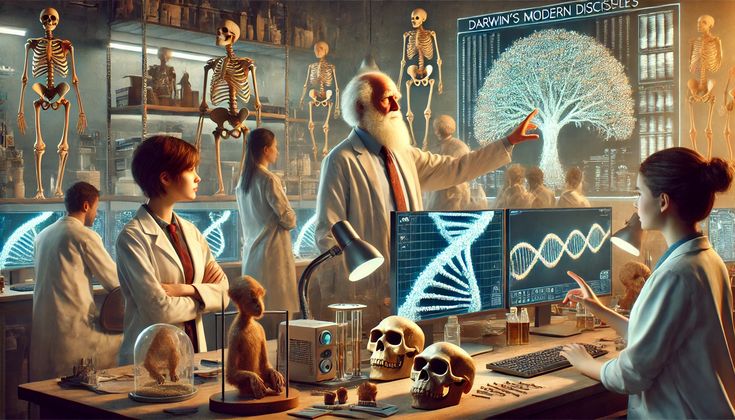
The story of human evolution is one of the most fascinating scientific narratives, exploring how modern humans (Homo sapiens) emerged from ancestral primates over millions of years. Human evolution combines insights from paleontology, genetics, anthropology, and archaeology to explain our physical, cognitive, and behavioral development. Understanding this process sheds light on why humans think, behave, and adapt the way we do, linking our biology to environmental pressures, cultural innovations, and survival strategies.
Origins of Humans
The evolutionary journey of humans begins in Africa, often referred to as the “cradle of humanity.” Fossil evidence suggests that hominins, our early ancestors, diverged from the common ancestor shared with chimpanzees around 6 to 7 million years ago. Species like Sahelanthropus tchadensis and Ardipithecus ramidus represent some of the earliest known hominins. These species exhibited bipedalism, a key trait distinguishing early humans from other primates. Bipedalism allowed early humans to travel efficiently, spot predators, and use their hands for tool-making and carrying food, setting the stage for further evolutionary adaptations.
Homo Genus and Key Species
The genus Homo emerged around 2.5 million years ago with species like Homo habilis, known as “handy man” for its use of stone tools. Homo erectus followed and was notable for its use of fire, advanced tools, and migration out of Africa into Asia and Europe. Fossil evidence shows that Homo erectus had a larger brain size than its predecessors, suggesting cognitive evolution and social cooperation. Other notable species include Homo neanderthalensis (Neanderthals), who lived in Europe and Western Asia and shared many behaviors with modern humans, such as tool-making, burial rituals, and possibly language. Finally, Homo sapiens appeared around 300,000 years ago, exhibiting advanced cognition, complex language, art, and cultural behaviors.
Genetic Evidence and Human Evolution
Modern genetics provides profound insights into human evolution. DNA analysis has revealed that humans share about 98-99% of their genome with chimpanzees, our closest living relatives. Genetic studies trace lineages, population migrations, and interbreeding events with archaic humans like Neanderthals and Denisovans. Evidence shows that non-African modern humans carry 1-2% Neanderthal DNA, suggesting interbreeding occurred as humans migrated out of Africa. Genetics also reveals adaptations to diverse environments, such as skin pigmentation, lactose tolerance, and high-altitude oxygen utilization in Tibetans. Studying genes helps scientists understand how evolutionary pressures shaped human physiology and behavior.
Environmental Pressures and Adaptation
Environmental changes played a critical role in human evolution. The transition from dense forests to open savannas in Africa created selective pressures favoring bipedalism, endurance running, and tool use. Climate fluctuations influenced migration patterns, food availability, and social structures. Humans developed larger brains and higher cognitive abilities in response to environmental complexity and the need for problem-solving. Adaptation to extreme environments, such as deserts, mountains, and cold regions, demonstrates humans’ ability to survive and thrive through behavioral, cultural, and biological evolution.
Tool Use and Technological Evolution
One of the hallmarks of human evolution is tool-making. Stone tools date back to at least 2.6 million years ago and demonstrate early humans’ ability to manipulate their environment. Over time, tools became more sophisticated, including spears, bows, and eventually metal implements. The development of tools facilitated hunting, food preparation, and protection, significantly affecting survival and reproductive success. Technological evolution also reflects cognitive complexity, planning skills, and social learning, setting humans apart from other primates.
Language and Communication
Language is another critical factor in human evolution. While the exact timing of its emergence remains debated, evidence from brain anatomy, vocal tract structure, and symbolic artifacts suggests that language evolved gradually over hundreds of thousands of years. Complex communication allowed coordination in hunting, social bonding, and knowledge transfer. The ability to communicate abstract ideas, plan for the future, and pass cultural knowledge is central to what makes humans unique among species.
Cultural Evolution
Cultural evolution has been intertwined with biological evolution. Early humans created art, engaged in rituals, and developed social norms, enhancing group cohesion and survival. Symbolic thinking, evidenced by cave paintings, figurines, and burial practices, indicates sophisticated cognitive abilities and a sense of identity. Cultural evolution accelerated human adaptation to new environments, allowing behavioral solutions to ecological challenges without relying solely on genetic change. This interplay between culture and biology continues to shape modern human societies.
Fossil Discoveries and Archaeology
Fossils and archaeological sites provide tangible evidence of human evolution. Notable discoveries include “Lucy” (Australopithecus afarensis), the Neanderthal remains in Europe, and early Homo sapiens fossils in Morocco. Tools, hearths, cave paintings, and other artifacts offer insights into behavior, diet, and social structures. These discoveries help reconstruct evolutionary timelines and provide clues about migration, adaptation, and cognitive development. Continuous archaeological research expands our understanding of how humans evolved over millions of years.
Modern Humans and Evolutionary Implications
Modern humans continue to evolve, though cultural and technological advancements have changed the dynamics of natural selection. Medicine, nutrition, and urban living influence survival and reproductive success in ways different from ancient times. Genetic variations still emerge, driven by environmental pressures and random mutations. Understanding human evolution provides insight into our biology, behavior, and health. It also emphasizes the deep connection humans share with other species and the environment, highlighting our place in the natural world.
Health and Disease Insights
Evolutionary biology helps explain human susceptibility to certain diseases. Traits that were advantageous in prehistoric environments, like storing fat during famine periods, can predispose modern humans to obesity and metabolic disorders. Studying evolution informs medicine, including genetic diseases, immune system responses, and adaptations to pathogens. Evolutionary medicine bridges biology with healthcare to understand why humans develop certain conditions and how they might be treated effectively.
Future Directions in Evolutionary Science
Advances in genomics, fossil analysis, and computational modeling continue to deepen understanding of human evolution. Ancient DNA sequencing, virtual reconstructions, and isotopic analysis provide precise insights into ancestry, diet, and migration. Future research may clarify how humans adapted to climate changes, diseases, and social structures, offering lessons for modern challenges. Integrating cultural, biological, and technological perspectives provides a holistic understanding of human evolution.
Conclusion
The science behind human evolution reveals a complex, interconnected process involving biology, environment, culture, and technology. From early hominins in Africa to modern Homo sapiens across the globe, humans have evolved through adaptation, innovation, and social learning. Fossil evidence, genetics, and archaeology collectively explain our physical traits, cognitive abilities, and behaviors. Studying human evolution not only illuminates our past but also informs health, society, and our future as a species. Understanding where we came from allows us to better appreciate our unique capacities and the challenges that shaped humanity over millions of years.