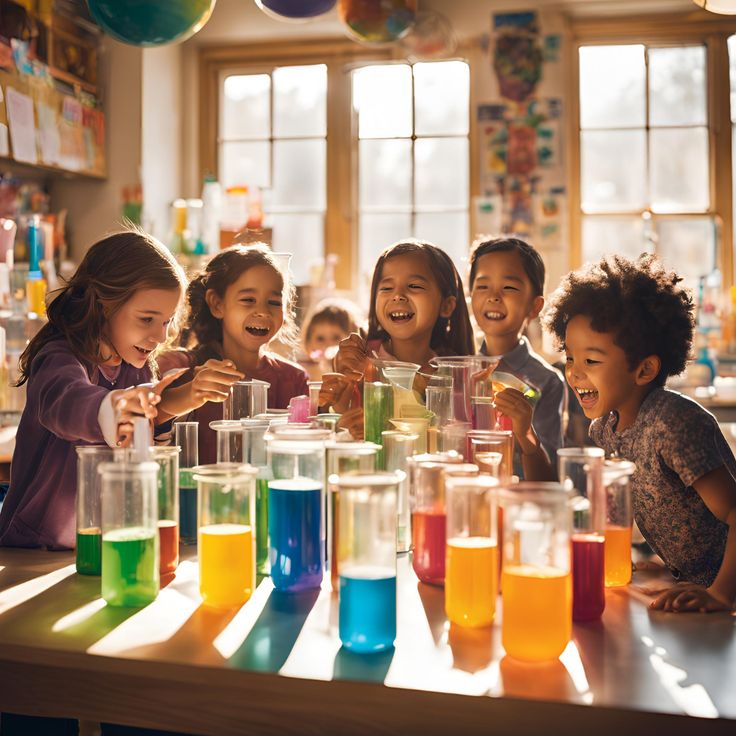
Hands-on science experiments are a fun and effective way for students to learn fundamental scientific concepts. By observing, experimenting, and analyzing results, students develop critical thinking, problem-solving skills, and curiosity about the world around them. Simple experiments can be performed with household items or basic laboratory equipment, making science accessible to learners of all ages. These activities demonstrate principles in physics, chemistry, biology, and earth sciences while encouraging creativity and exploration.
Why Simple Experiments Are Important
Simple experiments provide practical learning experiences that complement theoretical knowledge. They allow students to see concepts in action, reinforcing lessons learned in textbooks. Hands-on experimentation promotes engagement, improves retention, and fosters a sense of accomplishment. Additionally, experiments teach the scientific method: asking questions, forming hypotheses, conducting experiments, analyzing data, and drawing conclusions. These skills are essential for academic success and lifelong learning.
Physics Experiments
1. Balloon Rocket
Concept: Newton’s Third Law of Motion (action and reaction).
Materials: Balloon, straw, string, tape.
Procedure: Thread the string through the straw and secure it horizontally. Inflate a balloon and tape it to the straw without tying the end. Release the balloon and observe it move along the string.
Learning Outcome: Students understand that the air rushing out of the balloon creates an equal and opposite reaction, propelling the balloon forward.
2. Simple Pendulum
Concept: Periodic motion and gravity.
Materials: String, small weight (like a washer), stopwatch.
Procedure: Tie the weight to the string and attach it to a fixed point. Pull the pendulum to one side and release it. Measure the time it takes for multiple swings.
Learning Outcome: Students learn about gravitational force, oscillation, and how pendulum length affects the period of swing.
Chemistry Experiments
1. Baking Soda and Vinegar Reaction
Concept: Chemical reactions and gas production.
Materials: Baking soda, vinegar, container.
Procedure: Place baking soda in a container and pour vinegar over it. Observe the fizzing reaction.
Learning Outcome: Students see how a chemical reaction produces carbon dioxide gas, demonstrating gas evolution, acidity, and reactivity.
2. Homemade Lava Lamp
Concept: Density and solubility.
Materials: Clear container, water, vegetable oil, food coloring, effervescent tablets.
Procedure: Fill the container with water and oil, add a few drops of food coloring, then drop in an effervescent tablet. Observe the colorful bubbles moving through the liquid.
Learning Outcome: Students learn about density differences, immiscible liquids, and chemical reactions producing gas that moves through fluids.
Biology Experiments
1. Growing Bean Plants
Concept: Plant growth and photosynthesis.
Materials: Bean seeds, soil, pot, water.
Procedure: Plant bean seeds in soil and place them in sunlight. Water regularly and observe growth over days or weeks.
Learning Outcome: Students learn about germination, the role of sunlight, water, and nutrients in plant growth, and the basics of photosynthesis.
2. Observing Mold Growth
Concept: Fungi and decomposition.
Materials: Bread, ziplock bag, water.
Procedure: Slightly moisten bread, place it in a sealed bag, and leave it in a dark place. Observe mold growth over several days.
Learning Outcome: Students understand how fungi grow, the role of moisture and environment, and decomposition in ecosystems.
Earth Science Experiments
1. Water Filtration
Concept: Water purification and soil science.
Materials: Sand, gravel, cotton, funnel, dirty water.
Procedure: Layer cotton, sand, and gravel in a funnel and pour dirty water through it. Collect the filtered water in a container.
Learning Outcome: Students learn about filtration, sedimentation, and how natural processes can clean water, simulating environmental techniques.
2. Mini Volcano
Concept: Volcanic eruptions and chemical reactions.
Materials: Baking soda, vinegar, clay or playdough, container.
Procedure: Shape clay into a volcano around the container. Add baking soda inside, pour vinegar, and watch the eruption.
Learning Outcome: Students understand volcanic eruptions, pressure, gas release, and basic chemical reaction principles.
Tips for Conducting Experiments Safely
1. Always supervise students during experiments, especially when using chemicals.
2. Use protective gear such as gloves and goggles when necessary.
3. Conduct experiments in a clean, well-ventilated area.
4. Dispose of waste materials responsibly.
5. Encourage careful observation, note-taking, and discussion of results.
Benefits of Hands-On Science Learning
Hands-on experiments improve comprehension and retention of scientific concepts. They develop problem-solving and analytical skills, creativity, and teamwork. Students also learn patience, observation, and attention to detail. Performing simple experiments at home or in the classroom fosters curiosity and a love for science, helping students connect theoretical knowledge with real-world phenomena.
Integrating Technology with Experiments
Technology enhances hands-on learning. Using tablets or smartphones, students can record videos, take photos, and create digital logs of experiments. Simulations and virtual labs allow exploration of more complex phenomena that may not be feasible in a classroom. Combining physical experiments with digital analysis encourages deeper understanding and modern scientific literacy.
Conclusion
Simple science experiments are powerful tools for student learning, providing practical insight into physics, chemistry, biology, and earth sciences. They foster curiosity, critical thinking, and problem-solving skills. By conducting experiments safely and creatively, students connect classroom concepts with real-life applications. Encouraging experimentation at home or in school cultivates lifelong scientific curiosity and a deeper understanding of the world around us.